
Lightning strikes are unavoidable in aviation.
Every commercial aircraft—from large passenger jets to smaller platforms—must be engineered to safely handle electrical energy during a strike.
The objective isn’t prevention.
It’s control.
That means creating continuous electrical pathways that allow energy to move across the structure without disrupting critical systems.
What Happens During a Lightning Strike
When lightning hits an aircraft, electrical current travels across the outer structure.
If that energy encounters resistance, gaps, or discontinuities, it can:
- Interfere with avionics and communication systems
- Disrupt control electronics
- Damage sensitive components
- Create system-level failures
Modern aircraft rely heavily on electronics, which increases the importance of EMI shielding and grounding.
Why EMI Shielding Paints and Coatings Are Critical
One of the most effective ways to control electrical pathways is through conductive coatings.
Electrically conductive paints create a continuous surface that:
- Distributes electrical energy evenly
- Prevents localized arcing
- Maintains shielding across composite and metal structures
These coatings are especially critical for:
- Composite airframes
- Enclosures and housings
- Avionics compartments
Matrix Technology provides access to Parker Chomerics EMI shielding coatings and converts them into application-ready solutions.
Common EMI Shielding Paints Used in Aerospace
Several Parker Chomerics coatings are widely used in aircraft EMI protection.
These include:
- CHO-SHIELD 608 electrically conductive silver polyester paint
- CHO-SHIELD 2056 electrically conductive silver copper acrylic paint
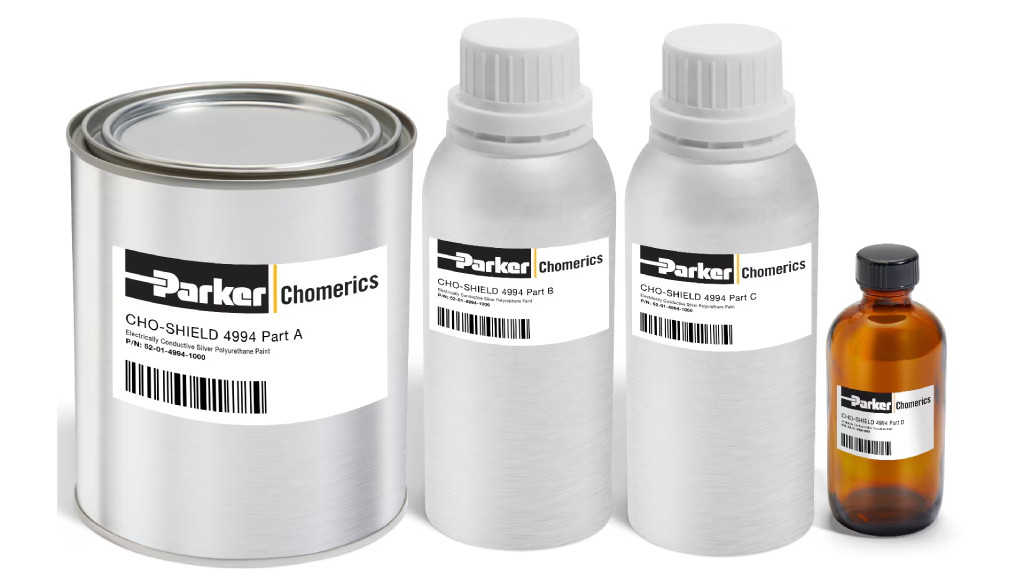
- CHO-SHIELD 4994 electrically conductive silver polyurethane paint
- CHO-SHIELD 610 electrically conductive silver copper epoxy paint
Each serves a different purpose:
CHO-SHIELD 608 is commonly used where a thin, lightweight coating is required.
CHO-SHIELD 2056 is designed for plastic substrates and enclosures requiring high EMI shielding performance.
CHO-SHIELD 4994 is often used in demanding aerospace environments due to its durability and conductivity.
CHO-SHIELD 610 provides a more robust epoxy-based solution for structural applications.
Where Conductive Coatings Are Applied
EMI shielding paints are typically applied to:
- Avionics housings
- Composite panels
- Interior enclosures
- Access panels and covers
These coatings ensure that electrical continuity is maintained even across non-metallic structures.
Conductive Gaskets for Electrical Continuity
Coatings alone are not enough.
Mechanical interfaces introduce gaps that must be sealed both electrically and environmentally.
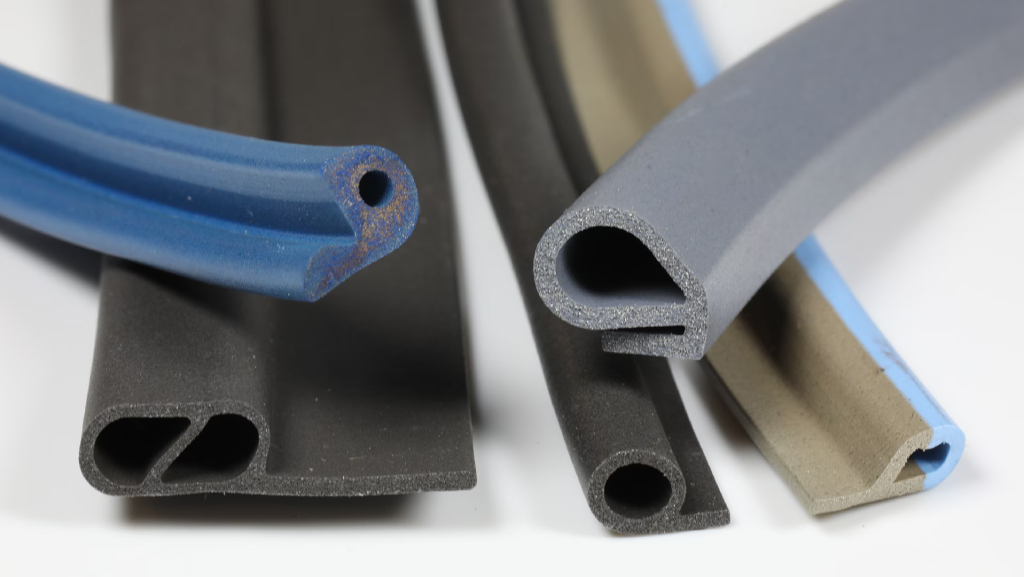
Electrically conductive elastomer gaskets are used to:
- Bridge mating surfaces
- Maintain grounding continuity
- Provide EMI shielding across joints
Typical solutions include:
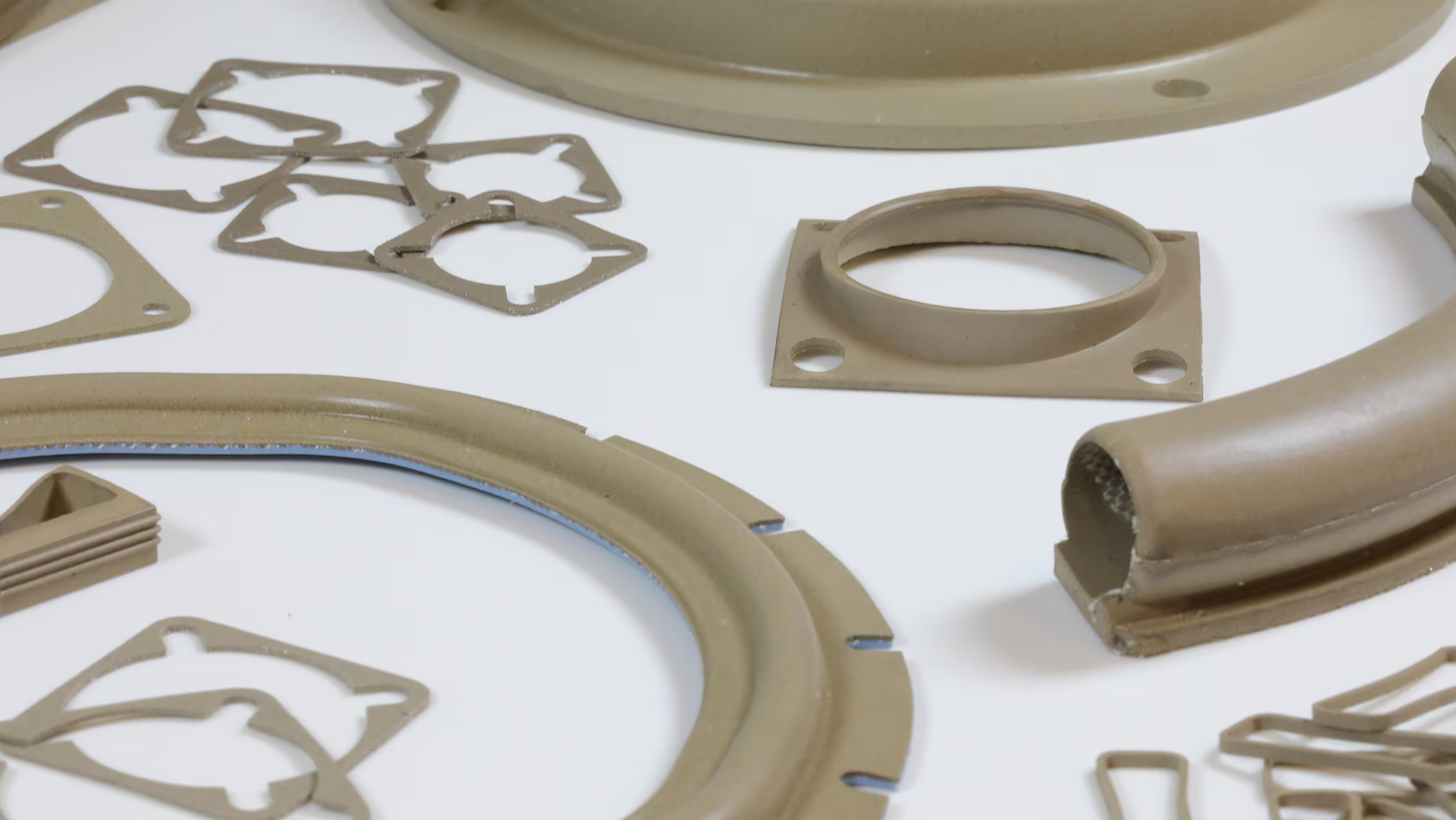
- CHO-SEAL conductive elastomer gaskets
- Extruded profiles for long sealing paths
- Die-cut gasket geometries for enclosures
These materials are critical for maintaining continuous electrical pathways across panel interfaces.
Conductive Adhesives for Micro-Gap Control
Even with gaskets and coatings, microscopic gaps can remain.
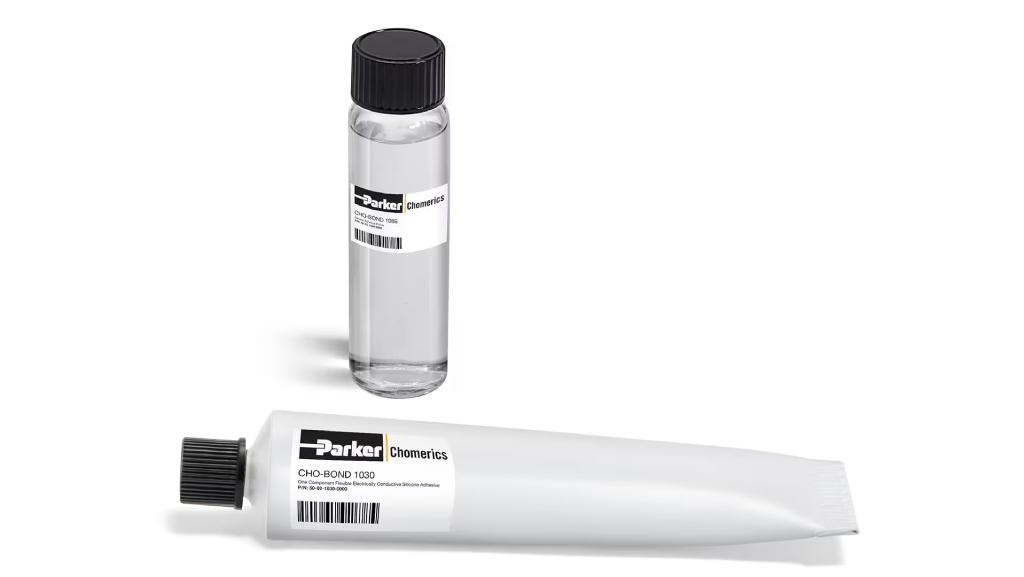
Conductive adhesives are used to fill these areas and maintain electrical continuity.
Common Parker Chomerics adhesive systems include:
- CHO-BOND 584-29 electrically conductive epoxy adhesive
- CHO-BOND 580-208 conductive epoxy system
- CHO-BOND 360-20 general purpose conductive adhesive
- CHO-BOND 592 conductive epoxy adhesive
These materials provide:
- Strong adhesion
- Electrical conductivity
- Gap-filling capability in hard-to-reach areas
They are especially useful in bonding, sealing, and grounding applications.
The Role of Custom Converting and Fabrication
Material selection alone does not guarantee performance.
The real challenge is integration.
Matrix Technology converts raw materials into application-ready components through:
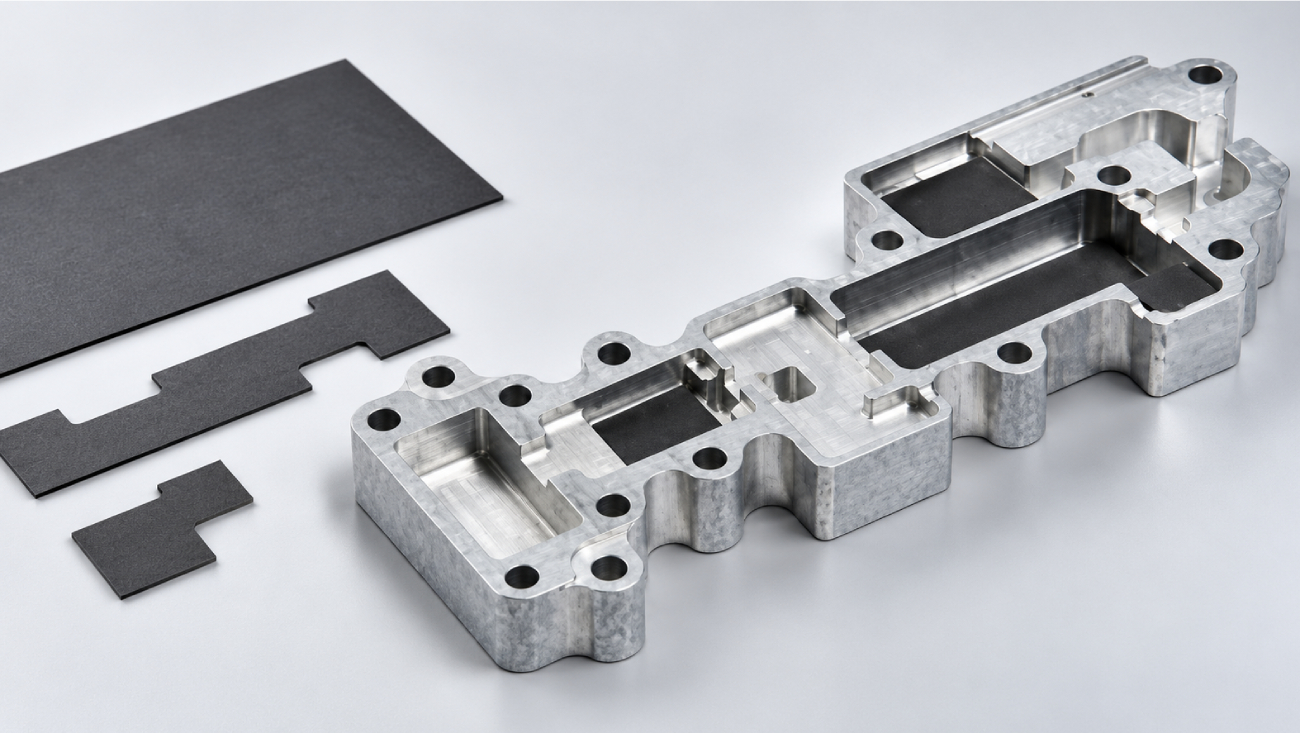
- Precision die-cutting
- Laminating multi-material assemblies
- Applying adhesives for installation
- Creating pre-configured kits
This ensures:
- Consistent installation
- Reduced assembly time
- Reliable performance in the field
Additional EMI Shielding Strategies
Effective aircraft protection typically combines multiple solutions.
These may include:
- Conductive tapes for grounding continuity
- Foil tapes for EMI containment
- Conductive plastics for lightweight shielding
- Ferrite components for noise suppression
This layered approach ensures full-system protection.
Where Most EMI Shielding Designs Fail
Failures usually do not come from the material itself.
They come from:
- Gaps between components
- Poor installation
- Incomplete coverage
- Lack of system-level integration
This is why converting and fabrication are critical to performance.
What This Means for Aerospace Applications
Aircraft systems must perform reliably under:
- Extreme temperatures
- Mechanical vibration
- Environmental exposure
- Long lifecycle requirements
EMI shielding solutions must be designed for real-world conditions—not just specified on paper.
Matrix Technology helps bridge that gap by delivering materials that are converted, configured, and ready for installation.
Why Work With Matrix Technology
Matrix Technology works with engineered materials from Parker Chomerics and transforms them into usable solutions.
They provide:
- Custom fabrication and converting
- Engineering support
- Integrated EMI, thermal, and sealing solutions
- Production-ready components
Need Help with EMI Shielding?
If your application depends on EMI performance, success depends on how materials are applied—not just what is selected.
Frequently Asked Questions
Common options include Parker Chomerics EMI shielding coatings available from Matrix Technology, such as:
- Parker Chomerics CHO-SHIELD 608 electrically conductive silver polyester paint
- Parker Chomerics CHO-SHIELD 2056 electrically conductive silver copper acrylic paint
- Parker Chomerics CHO-SHIELD 4994 electrically conductive silver polyurethane paint
- Parker Chomerics CHO-SHIELD 610 electrically conductive silver copper epoxy paint
These coatings are selected based on substrate type, environmental conditions, and required shielding performance.
Common conductive adhesives include Parker Chomerics CHO-BOND products available from Matrix Technology, such as:
- Parker Chomerics CHO-BOND 584-29 conductive epoxy adhesive
- Parker Chomerics CHO-BOND 580-208 conductive epoxy system
- Parker Chomerics CHO-BOND 360-20 general purpose conductive adhesive
- Parker Chomerics CHO-BOND 592 conductive epoxy adhesive
These materials are used to fill gaps and create reliable electrical pathways in bonding and grounding applications.