Thermal Management Meets Dielectric Strength in High-Voltage Systems
High-voltage power electronics demand two opposing material properties: efficient heat transfer and reliable electrical isolation. When either fails, the result is thermal runaway, dielectric breakdown, or premature system failure.
In EV powertrains, industrial motor controllers, alternative energy inverters, and heavy-duty automation systems, thermal interface material (TIM) selection directly affects safety, compliance, and lifecycle durability. Engineers need controlled heat flow without compromising isolation barriers between high-power components and grounded heat sinks.
Parker Chomerics CHO-THERM HV Series from Matrix Technology addresses this challenge by combining thermally conductive performance with enhanced electrical insulation for demanding high-voltage applications. For a broader view of engineered TIM categories, reference the Thermal Management (HUB).
Matrix is Parker Chomerics’ biggest distributor in Canada, providing engineered material support, precision conversion, and application-driven guidance across regulated industrial markets.
What Is the CHO-THERM HV Series?
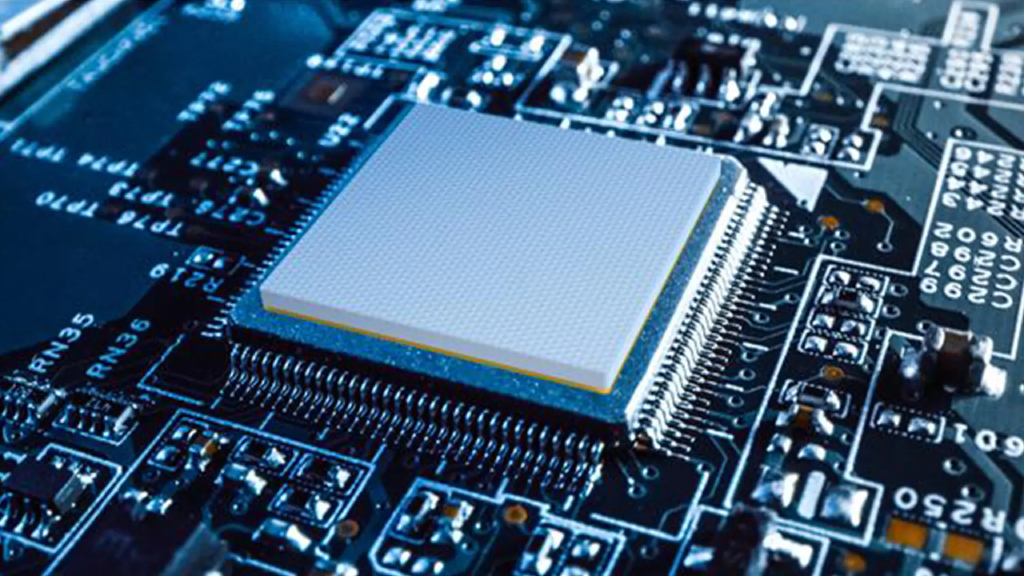
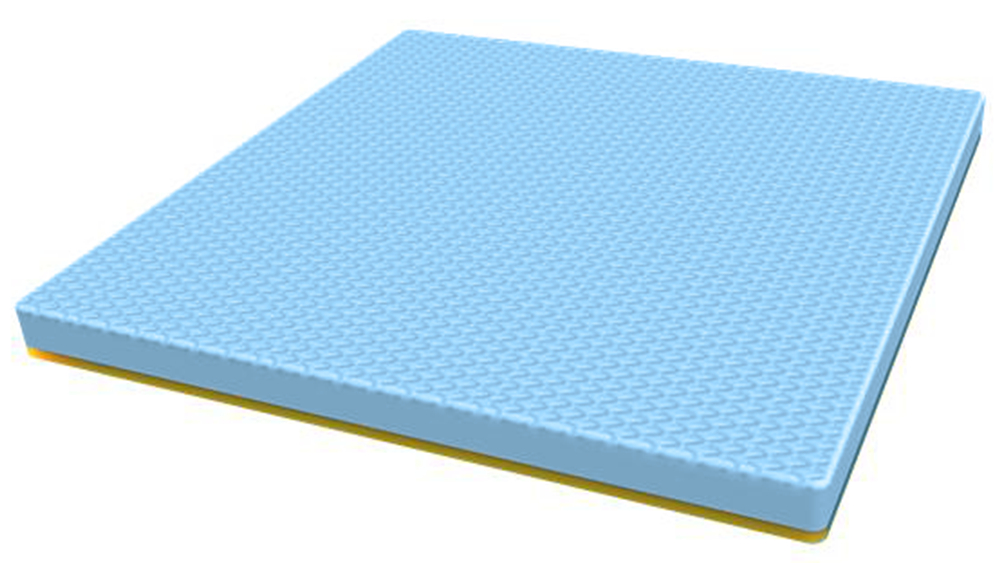
The Parker Chomerics CHO-THERM HV Series is a family of thermally conductive, electrically insulating pads designed for high-voltage power electronics.
Performance overview:
- Thermal conductivity: 1.1–3.3 W/m-K
- DC breakdown voltage: up to >20 kV
- Shore 00 hardness: 30–35
- Ultra-low compression force
- High-tack surface to reduce thermal contact resistance
- Vibration dampening
- PSA options available
- UL94 V-0 rated
- RoHS compliant
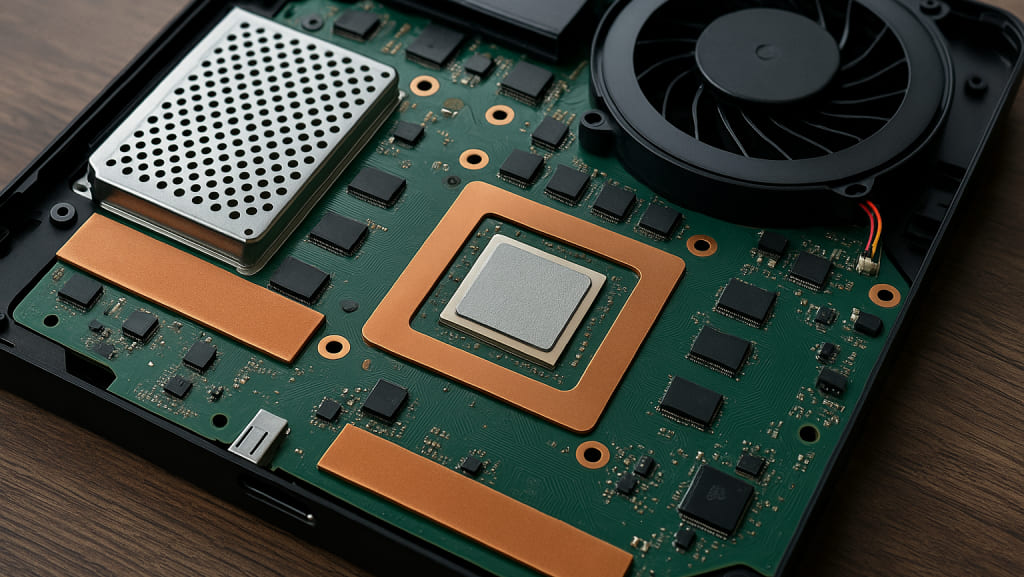
They are engineered to transfer heat from:
- CPUs and GPUs
- High-power busbars
- Power modules and controllers
To:
- Heat sinks
- Cold plates
- Cooling pipes
- Vapor chambers
All while maintaining electrical isolation between high-voltage components and grounded structures.
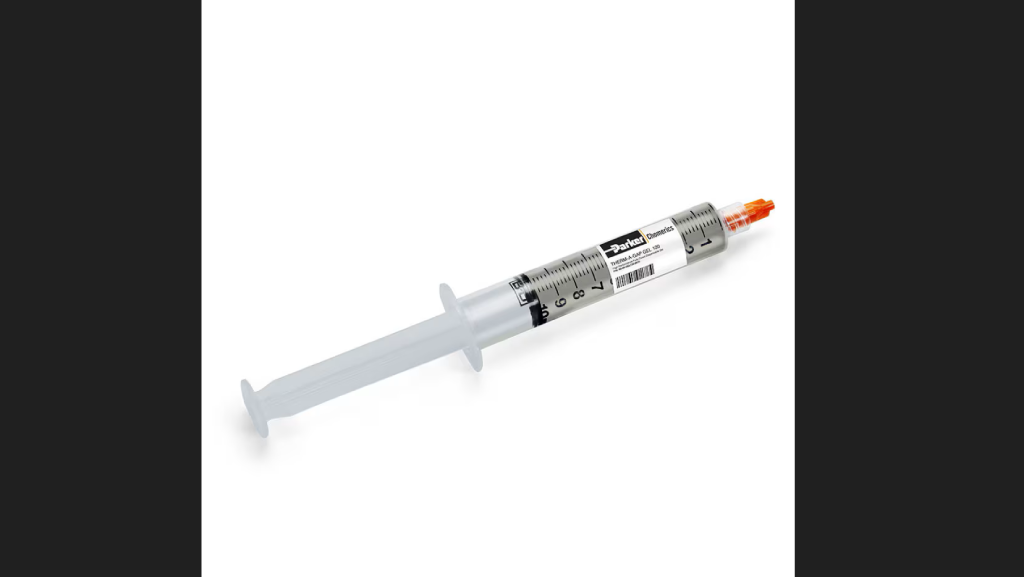
For applications requiring thicker materials to accommodate uneven stack-ups, review Thermal Gap Pad Solutions. Where automated assembly is required, Dispensable Gel Solutions may also be evaluated.
Why Thermal Conductivity Alone Is Not Enough
In high-voltage systems, optimizing purely for W/m-K is a reliability risk. Dielectric strength and compression behavior are often the true design constraints.
Key Engineering Considerations
| Parameter | Why It Matters in HV Systems |
|---|---|
| Thermal conductivity | Controls heat transfer rate from device to cooling structure |
| Breakdown voltage | Prevents electrical arcing and insulation failure |
| Compression force | Protects solder joints, substrates, and ceramic packages |
| Conformability | Eliminates air gaps that increase thermal resistance |
| Outgassing | Critical in sealed or sensitive electronic assemblies |
The CHO-THERM HV Series balances all five without forcing trade-offs that compromise long-term performance.
Dielectric Strength Up to >20 kV DC
Battery systems, busbars, and power conversion assemblies are operating at increasing voltage levels across EV, energy storage, and industrial electrification platforms.
The CHO-THERM HV Series incorporates high-performance dielectric layers to enhance electrical isolation between:
- Power semiconductors and grounded heat sinks
- High-voltage busbars and structural enclosures
- Traction inverters and chassis structures
This added insulation layer supports breakdown voltages up to >20 kV under DC load, helping engineers maintain isolation integrity in high-energy systems.
For enclosure-level shielding strategies that complement electrical isolation, explore the EMI Shielding (HUB) and Shielded Gasket Solutions.
Ultra-Low Compression Force for Sensitive Assemblies
High clamping pressure can damage:
- Solder joints
- Ceramic substrates
- Power module housings
- PCB assemblies
With Shore 00 hardness between 30–35, the CHO-THERM HV Series conforms to rough or uneven surfaces with minimal mechanical stress.
Benefits include:
- Reduced substrate warpage
- Improved interface contact
- Lower thermal contact resistance
- Vibration dampening in mobile or industrial platforms
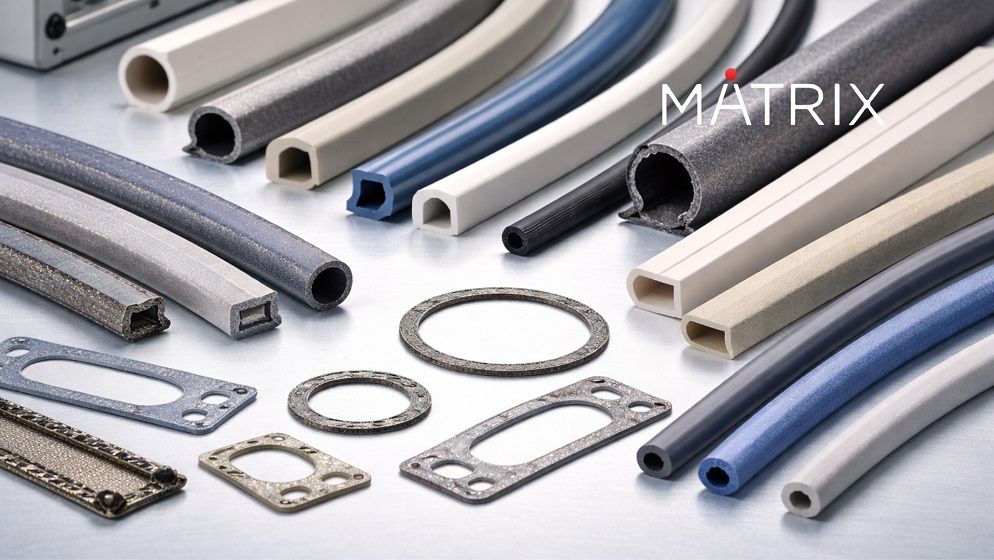
In complete enclosure builds, thermal pads may be integrated alongside sealing systems from the Gaskets (HUB) or high-temperature options such as High-Temperature Gaskets.
Conversion and Integration Support
CHO-THERM HV pads can be supplied as:
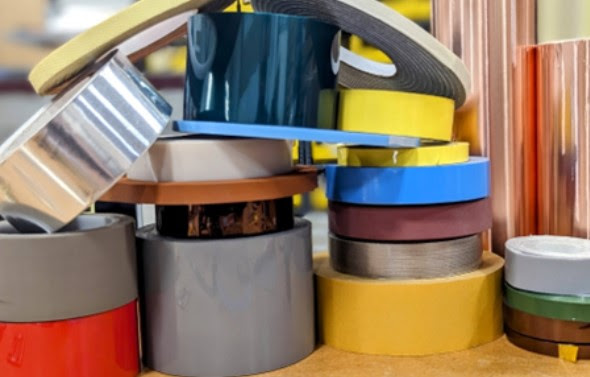
- Large-format sheets for high-volume converting
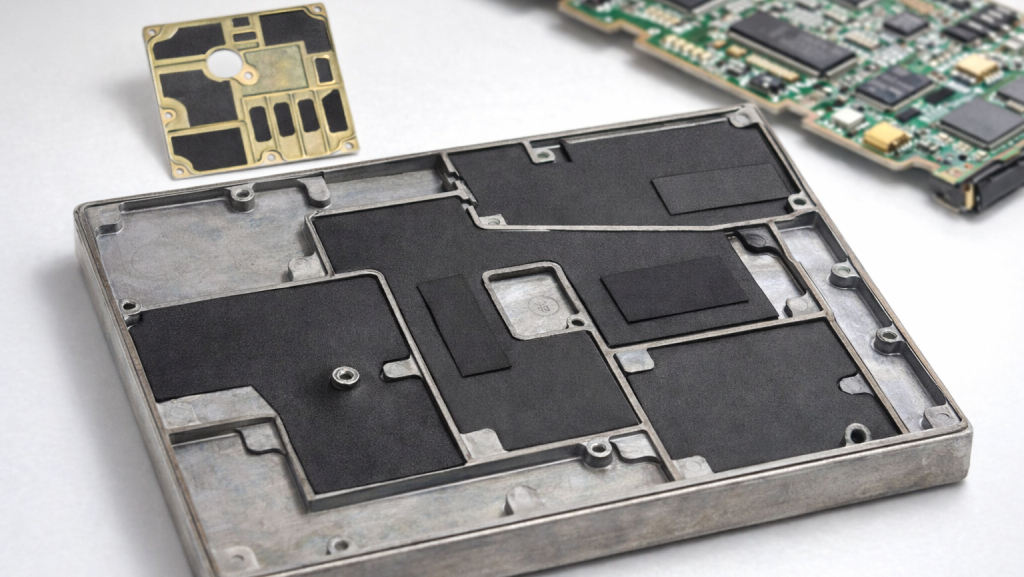
- Custom die-cut geometries
- PSA-backed configurations
- Complex shapes for busbar and module interfaces
Matrix provides tight-tolerance die-cutting, prototyping, and production scaling through advanced converting capabilities. Learn more about our fabrication expertise on the Capabilities page.
Where system-level integration includes connectors, overmolding, or ruggedized cable assemblies, see our Integrated Interconnect & Cable Assembly Solutions overview for how engineered materials and interconnect platforms align within a unified build strategy.
Frequently Asked Questions
Thermal pads are preferred when:
- Electrical isolation is mandatory
- Controlled thickness is required
- Assembly consistency is critical
- Reworkability matters
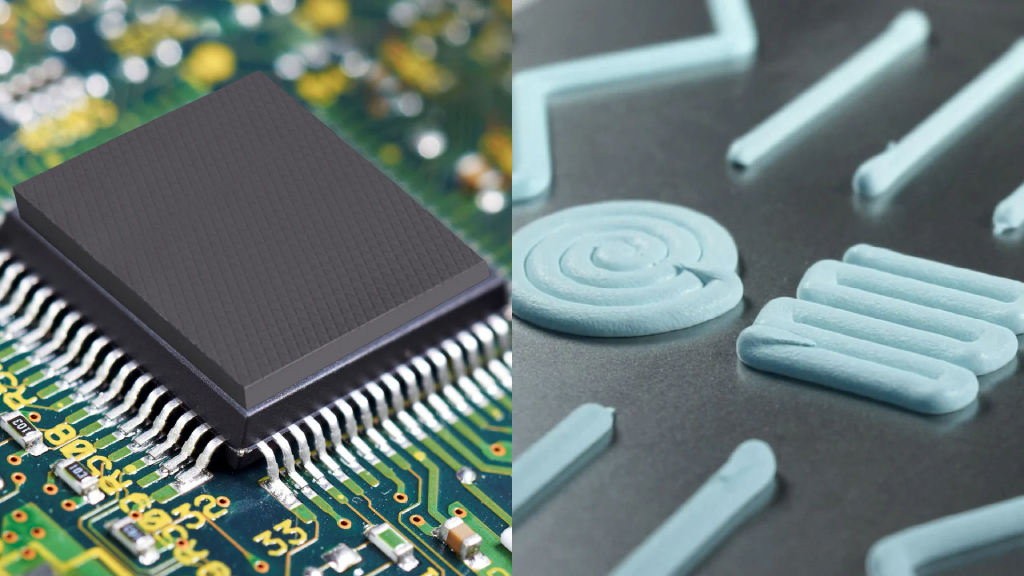
Thermal grease, such as options found under Conductive Grease Solutions, may offer lower interfacial resistance but does not provide the same structural stability or integrated dielectric layers as engineered high-voltage pads.
Yes. Through precision converting and fabrication expertise detailed on the Capabilities page, materials can be supplied in custom die-cut formats tailored to busbars, power modules, and multi-surface interfaces.
Thermal management in high-voltage systems is no longer a single-parameter decision. Heat transfer, dielectric strength, mechanical stress, EMI control, and environmental sealing must be engineered together. The Parker Chomerics CHO-THERM HV Series from Matrix Technology delivers that integrated performance—supported by precision conversion and application-level engineering guidance.