Conductive Elastomer Solutions Available from Matrix Technology Ltd
Electromagnetic interference (EMI) is a common cause of electronic performance issues, compliance failures, and long-term reliability problems—especially in sealed enclosures operating in electrically noisy or harsh environments.
Electrically conductive elastomer gaskets are widely used to address these challenges by blocking electromagnetic energy at enclosure seams while also providing environmental sealing. Matrix Technology Ltd supplies conductive elastomer EMI shielding gaskets from leading manufacturers, including Parker Chomerics, supported by precision converting, fabrication, and testing services to help ensure reliable performance in real-world applications.
At a glance
- EMI shielding and environmental sealing in a single component
- Designed to support corrosion resistance and long service life
- Available in molded and extruded formats for different enclosure designs
- Effective at low closure forces, reducing stress on housings and fasteners
Have questions about EMI shielding gaskets for your enclosure?
Why EMI Shielding at the Enclosure Seam Matters
In practical enclosure design, mating surfaces are never perfectly flat or rigid. Surface roughness, fastener spacing, coatings, and tolerance stack-up all create gaps that allow electromagnetic energy to leak in or out of an enclosure.
Conductive elastomer gaskets help mitigate these issues by:
- Conforming to surface irregularities under compression
- Maintaining electrical continuity across the enclosure seam
- Preserving contact pressure despite vibration, thermal cycling, and aging
Unlike some alternative EMI solutions, conductive elastomer gaskets also function as true environmental seals, helping limit moisture ingress, corrosion, and contamination at the enclosureCommon Conductive Elastomer Gasket Configurations interface.
Need help evaluating flange design, compression limits, or shielding requirements?
Conductive Elastomer Gaskets: Performance and Design Considerations
Conductive elastomer gaskets are designed to combine electrical conductivity with the mechanical compliance of an elastomer. This allows them to maintain consistent contact between mating surfaces even as conditions change over time.
Key performance considerations include:
- Electrical conductivity at the gasket-to-flange interface
- Resistance to compression set for long-term sealing
- Compatibility with enclosure materials and finishes
- Ability to perform under vibration, temperature cycling, and environmental exposure
Because enclosure designs vary widely, selecting the right conductive elastomer gasket is often a balance between electrical performance, mechanical requirements, and cost considerations.
Evaluating conductive elastomer options for your design?
Molded vs. Extruded Conductive Elastomer Gaskets
Conductive elastomer gaskets are available in multiple formats. The best option depends on enclosure geometry, tolerance variation, production volume, and overall system requirements.
Molded Sheets and Molded Parts
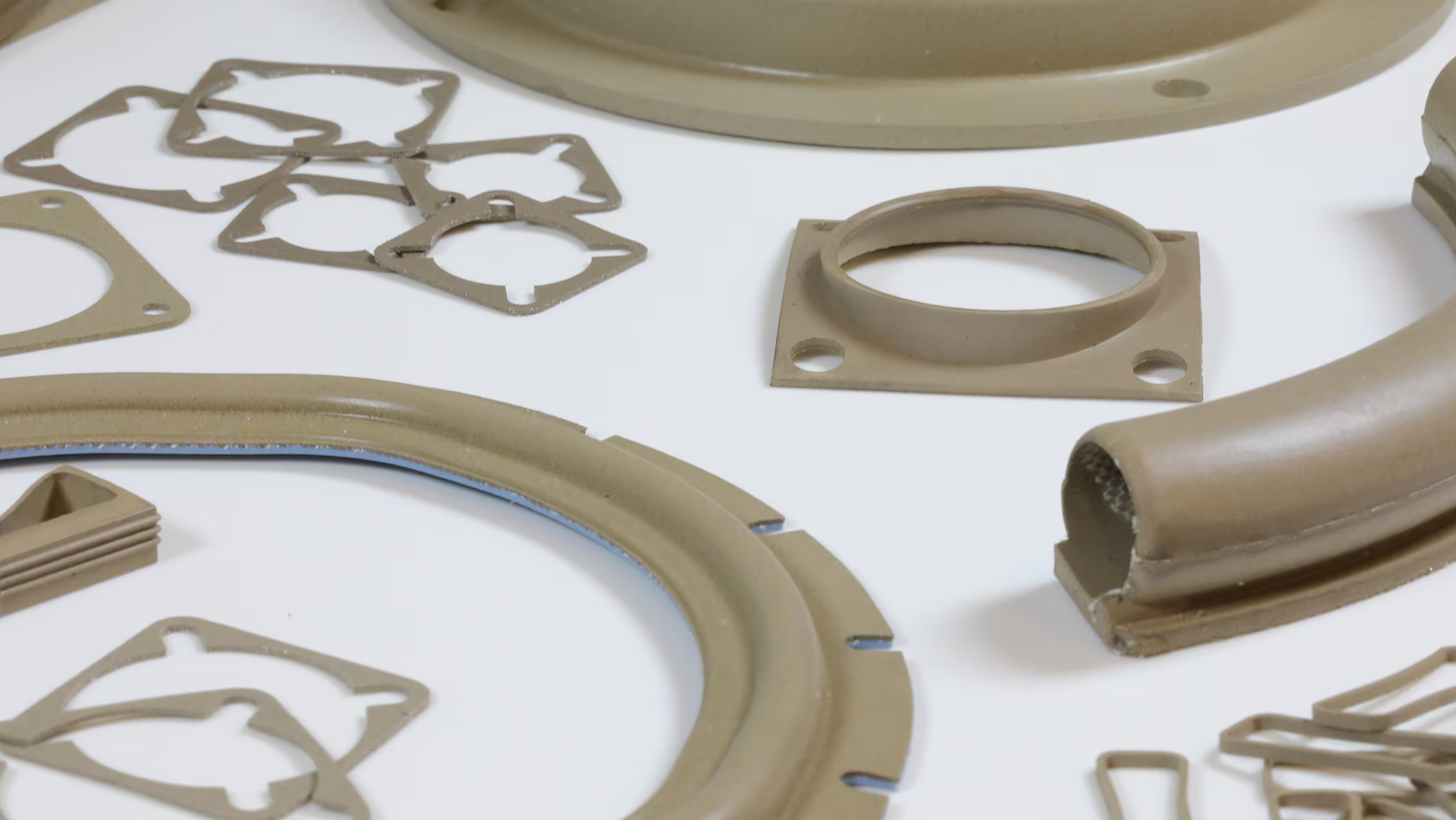
Molded conductive elastomers are supplied as flat sheet stock or custom-molded profiles such as O-rings or D-rings.
Common advantages
- Supports complex geometries and detailed features
- Good dimensional control for precision interfaces
- Well suited for connector gaskets, waveguides, and critical sealing areas
Typical considerations
- Tooling and per-part cost are generally higher
- Often selected where performance requirements outweigh unit cost
Extruded Strips and Cord Stock
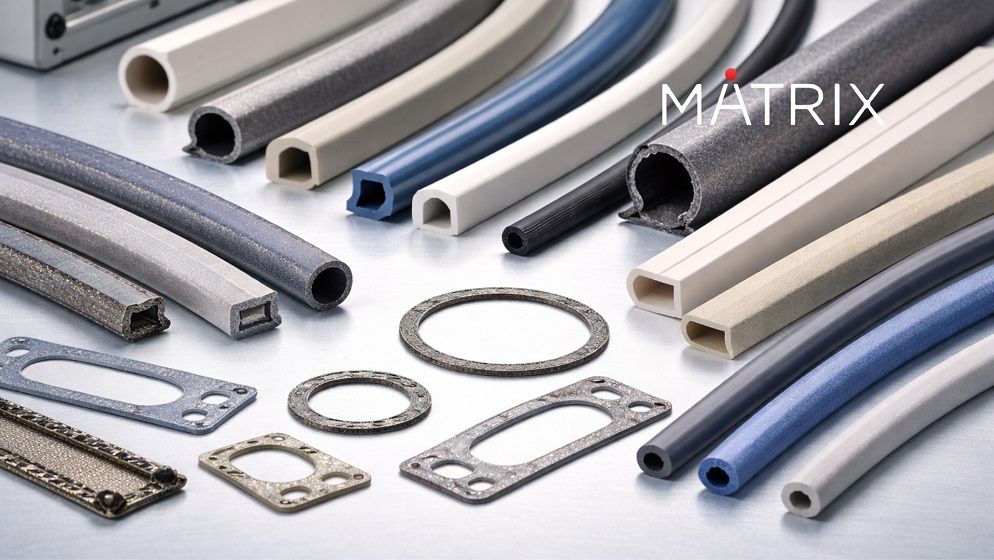
Extruded conductive elastomer profiles are supplied as continuous lengths, cut-to-length strips, or spliced into closed-loop seals.
Common advantages
- Cost-effective for long or rectangular enclosure perimeters
- No practical limitation on length
- Flexible for design iteration and prototyping
Typical considerations
- Corner radii and groove design must prevent twisting
- Splice quality is critical for electrical continuity and sealing
Not sure which format is right for your enclosure?
Common Conductive Elastomer Gasket Configurations
Conductive elastomer gaskets are available in a wide range of configurations to support different sealing and shielding needs, including:
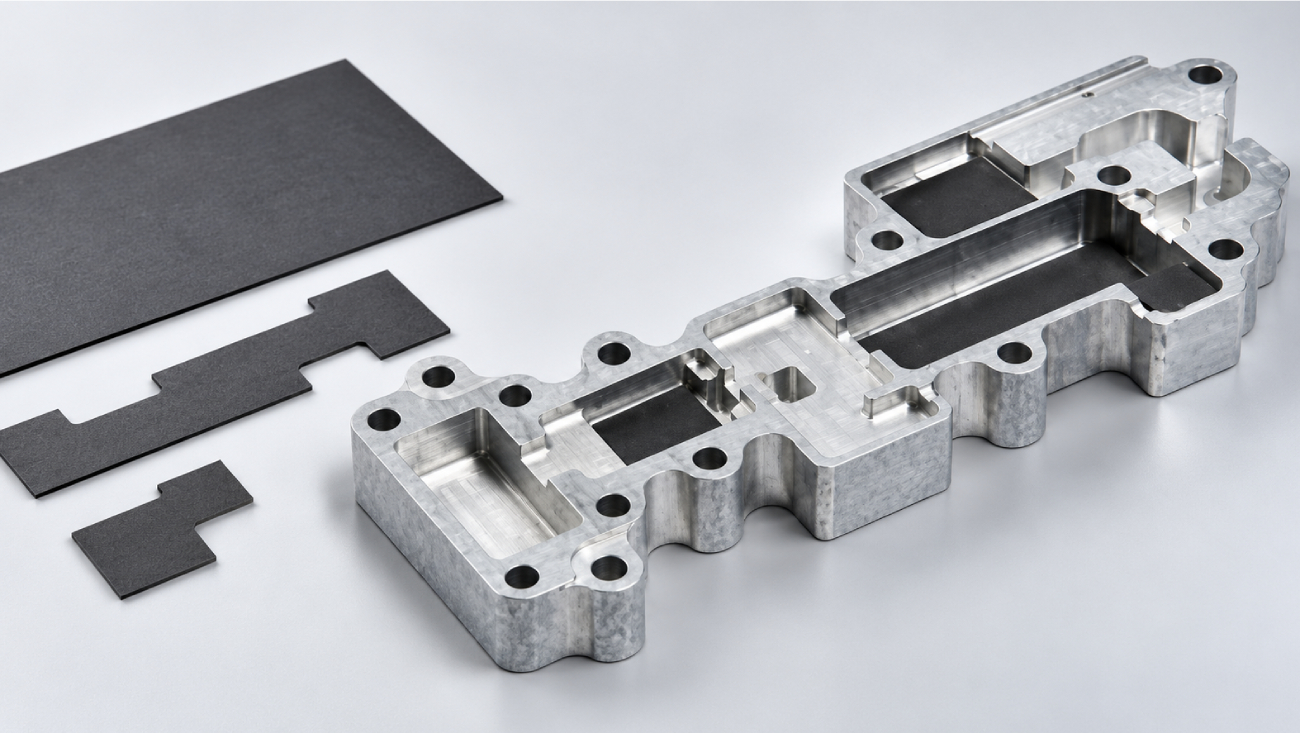
- Sheet stock and fabricated die-cut parts
- Extrusions and cord stock
- Molded O-rings and D-rings
- Waveguide gaskets
- D-subminiature and connector gaskets
- Flat washer gaskets and jam nut seals
- Co-extruded gaskets
- Molded reinforced seals
Each configuration supports different deflection ranges, compression limits, and EMI performance characteristics that should be aligned with enclosure design requirements.
Typical Applications and Industries
Conductive elastomer gaskets are used wherever electronics must be protected from both EMI and environmental exposure, including:
- Aerospace and defense electronics
- Telecommunications and RF equipment
- Industrial control and automation systems
- Transportation and mobility platforms
- Instrumentation and measurement devices
- Medical and laboratory equipment (non-clean-room)
- Energy, utility, and infrastructure electronics
Value Beyond Distribution: Matrix Technology Ltd
Matrix Technology Ltd is more than a material supplier. We specialize in precision converting and application support for engineered materials used in electronic and electromechanical systems.
Advanced Converting & Fabrication
- Rotary and die cutting for precision and high-volume parts
- Laminating, splicing, and vulcanizing for enhanced performance
- Tube and sleeve cutting for harnessing and insulation
- Precision tape slitting to application-specific widths
- PSA application where appropriate for assembly efficiency
Testing & Compliance Support
- Electrical, mechanical, and environmental validation
- EMC / EMI testing support
- Vibration, shock, temperature cycling, humidity, and salt fog testing
- Qualification support aligned with aerospace and defense standards
Supply Chain & Value-Added Services
- Low-order-quantity access to premium material brands
- Kitting and sub-assembly to streamline production
- Dedicated inventory programs
- Restore-to-spec recertification to extend product life
- One-stop support with XACT for integrated materials, cabling, and interconnects
Matrix operates under robust quality and compliance frameworks, including AS9100 certification, NIST alignment, RoHS compliance, and the Controlled Goods Program.
Looking for more than material supply?
Frequently asked questions
- CHO-SEAL® 1285 – Silver-plated aluminum–filled elastomer
- CHO-SEAL® 1215 – Silver-plated copper–filled elastomer
- CHO-SEAL® 1217 – Silver-plated copper–filled elastomer optimized for mechanical compliance
- CHO-SEAL® 1298 – Nickel-graphite–filled elastomer
- CHO-SEAL® 1350 – Silver-plated copper–filled elastomer for high-performance EMI shielding
- CHO-SEAL® 6502 / 6503 – Environmentally focused conductive elastomers
These material families are available in molded sheets, molded parts, extrusions, and custom-fabricated configurations, depending on application requirements.
Exact part numbers vary based on form factor, dimensions, and finishing requirements. In many cases, these references identify the conductive filler system and elastomer base, with final part numbers defined by geometry, size, and fabrication method.
For application-specific part numbers or custom formats, Matrix Technology Ltd can assist with material selection, conversion, and cut-to-print options